Junkie High vs. Sober Math: Snoop Dogg’s $100M Death Row Lesson
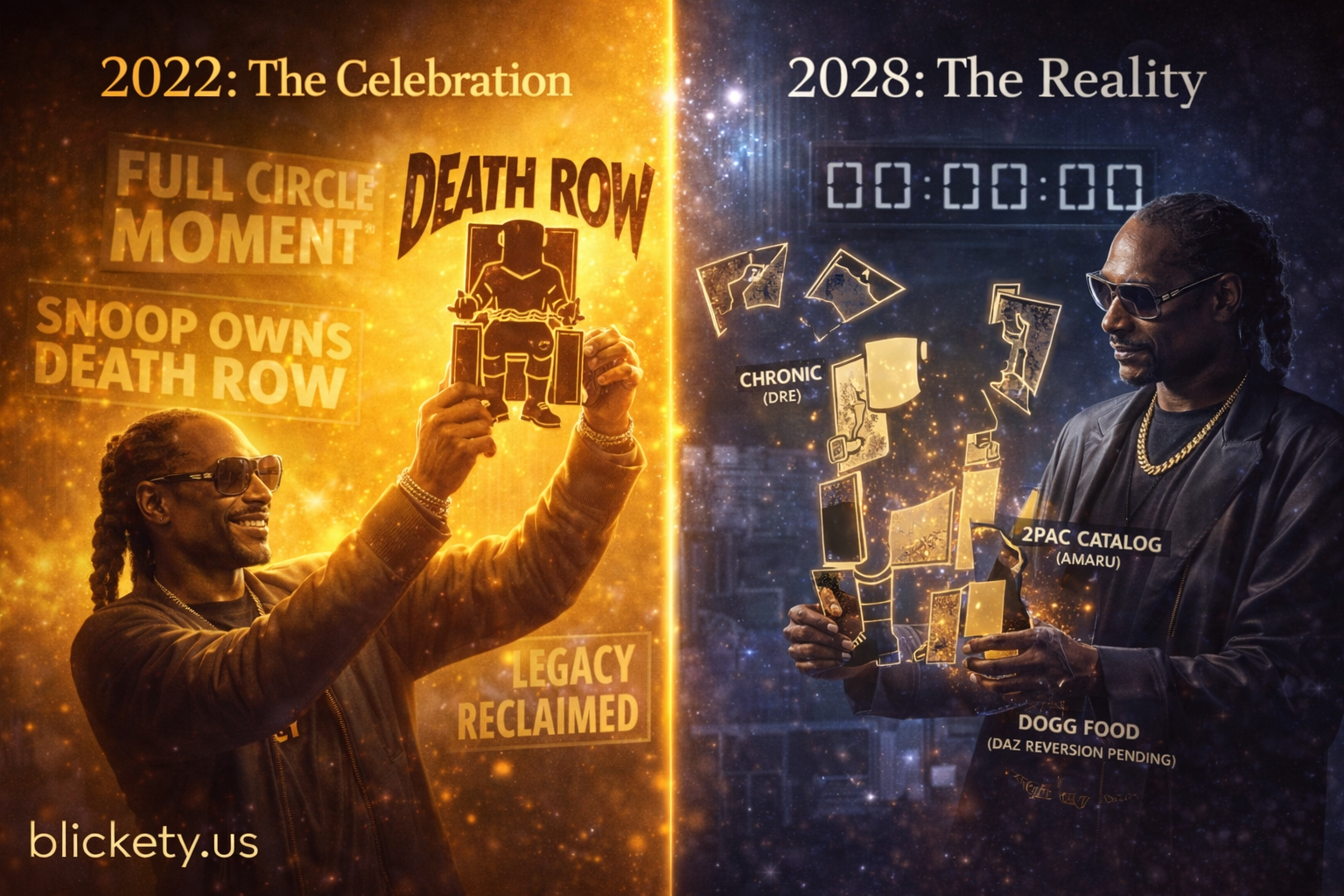
February 2022. Snoop Dogg drops the bomb: he’s bought Death Row Records—the label that birthed Doggystyle, The Chronic, and the West Coast sound that defined a generation. Headlines explode. Fans lose their minds. Snoop calls it “meaningful,” a full-circle moment.
It looked like the ultimate flex. 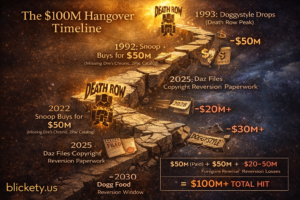
But sober math never lies.
The $50M Upfront Hit for Half a Vault
Industry sources valued the catalog portion around $50 million when Snoop closed the deal with MNRK (Blackstone-backed), while the entire Death Row catalog generated only about $6 million for MNRK in 2021. That’s paying 8x annual revenue for a depreciating asset.
But the vault came pre-gutted:
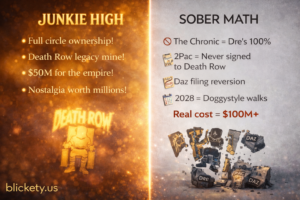
The Chronic (1992) — Dr. Dre owns 100%. His lawyer shut it down immediately in 2022: “Dr. Dre owns 100% of The Chronic”. Never part of the package.
2Pac’s biggest albums — All Eyez on Me and The Don Killuminati are owned by Amaru Entertainment and the Tupac estate. Tupac was Interscope/Out da Gutta, not direct Death Row.
Those two acts drove the bulk of streaming and licensing cash. Without Dre and Pac? Revenue drops to ~$6 million baseline. That’s $9 million a year gone—$45-50 million in foregone revenue over just five years.
Already underwater before copyright reversion even kicks in.
The Copyright Reversion Bomb: $30-60M+ Slipping Away
Here’s where the junkie high meets the hangover. Under the U.S. Copyright Act §203, any song created in or after 1978 is eligible for reversion 35 years from publication. Death Row’s golden era hits the window right now:
- Doggystyle (1993) → ~2028
- Dogg Food (1995) → ~2030
Daz Dillinger revealed in November 2025 that Snoop kicked him off Death Row after Daz filed for copyright reversion paperwork, refusing to sign his catalog over. Daz stated: “He’s just like, ‘You ain’t signing your catalog over to me.’ And I’m like, ‘I’m keeping it. It’s worth a lot.’ My publishing is more valuable than the label’s ownership”.
Daz isn’t waiting quietly. He told Dr. Dre regarding The Chronic royalties: “Copyright reversions law is filed… Y’all on a time limit 4 more yrs til it reverts bac”.
If even 30-50% of the remaining catalog reverts (conservative estimate), Snoop loses U.S. control over streaming royalties, syncs, samples, and licensing for key tracks. At $6 million/year baseline plus hip-hop catalog growth, that’s easily $20-50 million+ in lost future revenue over the next decade.
The math:
- Upfront cost: ~$50M
- Immediate exclusions/revenue hole: ~$45-50M (5 years)
- Copyright reversion erosion: ~$20-50M+
Effective hit: $100-150 million in opportunity cost and value leakage. Not all cash out the door, but a massive overpay for something already on borrowed time.
Junkie High: The Rush That Blinded Everyone
Snoop lived the era. Knew the players. Yet the high overrode sober due diligence:
- Didn’t lock down Dre (who was “so upset” initially)
- Ignored 2Pac’s separate structure
- Didn’t consult Daz early (family beef exploded later)
- Bought at peak hype, right before the ’90s copyright reversion wave hits hard
A sober mind runs the math: “Biggest juice already squeezed. Reversion starts soon. Key pieces missing. This is depreciating nostalgia, not a vault.”
But when you’re high—on blunts, ego, nostalgia—you chase the feeling, not the spreadsheet.
The Afro-Futurist Truth: Reversion as Liberation Technology
Here’s what mainstream business media won’t tell you: copyright reversion rights were enacted specifically for creative artists—the major labels, mega publishers like Sony, Universal, Warner-Chappell, the RIAA, ASCAP, and BMI don’t want artists knowing about these rights.
Our ancestors understood that liberation requires reclaiming what was taken. Copyright reversion is the legal mechanism allowing original creators—disproportionately Black artists exploited through bad ’90s deals—to yank back ownership after 35 years.
Daz gets it: “Keep the money. I want the rights.” Because publishing royalties compound forever. Label ownership? That’s just custody until the clock runs out.
This is ancestral wisdom meeting 2026 legal infrastructure. The same genius that powered the Underground Railroad, the Great Migration, Black Wall Street—strategic movement toward ownership and self-determination.
Snoop chased the logo. Daz is claiming the legacy.
The Lesson for All of Us
This isn’t shade on Snoop—he’s pivoting with gamma partnerships, publishing deals, new releases. But the golden vault? Walking out one clause at a time.
The blueprint for everyone chasing legacy bags (crypto, real estate, music catalogs, whatever):
✅ Check the reversion clock before buying
✅ Run the actual numbers, not the nostalgia 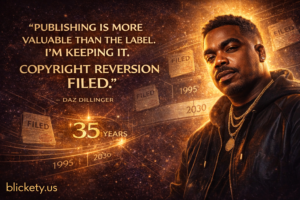 ✅ Talk to the cousins who hold the rights
✅ Understand what you’re actually getting vs. what headlines say
Ownership looks permanent until the copyright reversion clause reminds you it’s rented. The junkie high feels invincible in the moment. Sober math wins every time.
Snoop still has the logo, new releases, merch, and some royalties. But the Doggystyle and Dogg Food masters that made Death Row legendary? They’re reverting to the artists who created them—exactly as the law intended.
Don’t get high on your own supply. The hangover hits harder than you think.
Understanding your copyright reversion rights? Black artists deserve to know the 35-year law exists. Share this story. Protect the culture.