Guinea Political Transition 2025: Doumbouya’s Presidency and West Africa’s Future
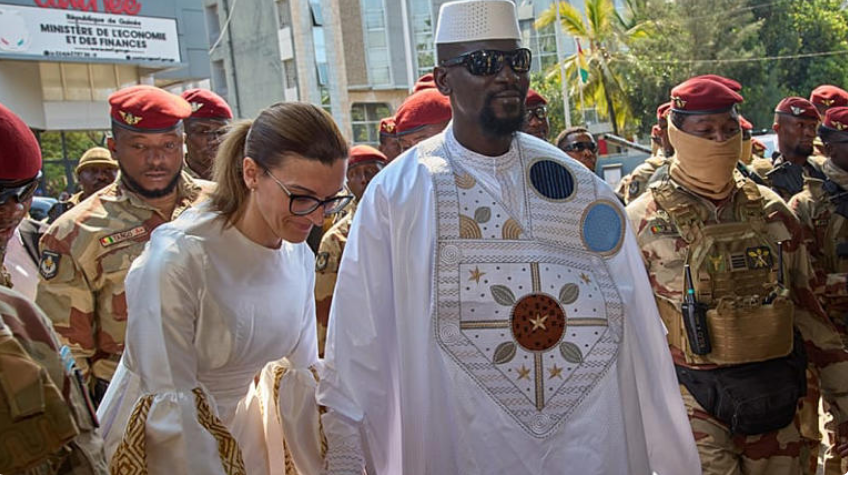
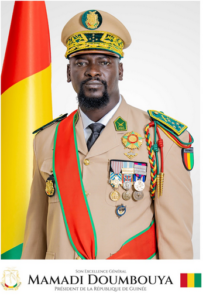
On Saturday, General Mamadi Doumbouya took the presidential oath at a brand-new 55,000-seat stadium on the outskirts of Conakry, marking a pivotal moment in Guinea’s political transition 2025. His overwhelming December electoral victory—86.7 percent of the vote—was confirmed by the Supreme Court, cementing a transition that began with a 2021 military coup and evolved into what authorities present as democratic legitimization.
However, the story of Guinea’s political transition 2025 cannot be told in isolation. Instead, it’s part of a broader West African pattern where military governments navigate the tension between popular frustration with civilian leadership and international pressure for democratic governance. Moreover, it raises fundamental questions about sovereignty, resource control, and what democracy actually means when half your population lives in poverty despite sitting on some of the world’s richest mineral deposits.
For the African diaspora watching from abroad and Pan-African observers across the continent, Guinea’s moment demands nuanced analysis that moves beyond simplistic narratives of “democratic backsliding” or “military strongmen.” The real questions are more complex: Who controls Guinea’s resources? Who benefits from its wealth? And what governance models actually serve African people?
Understanding Guinea’s Political Transition 2025: From Coup to Constitution
General Mamadi Doumbouya seized power in September 2021, overthrowing President Alpha Condé who had himself manipulated the constitution to extend his rule beyond term limits. Initially, Doumbouya promised a transitional period and explicitly stated he would not become a candidate for president.
But political promises in transitional periods often prove flexible. Over the following years, Guinea underwent a constitutional process that conveniently removed barriers to military leaders seeking office. Furthermore, the new constitution extended presidential terms from five to seven years—a move that opposition figures and international observers criticized as power consolidation.
The December Election: Democratic Exercise or Foregone Conclusion?
The December 2024 presidential election presented eight candidates against Doumbouya. On paper, this suggests democratic competition. In reality, critics argue that systematic suppression of political opposition and dissent left no viable challengers to the incumbent military leader.
Yero Baldé, who placed second with just 6.59 percent of the vote, initially filed a petition alleging electoral manipulation in Doumbouya’s favor. However, authorities claimed he withdrew the complaint one day before the Supreme Court verdict—a timing that raised eyebrows among election observers.
The official 86.7 percent victory margin tells a familiar story across African political transitions: overwhelming wins that suggest either genuine popular mandate or electoral environments where opposition cannot meaningfully compete. Determining which requires examining not just vote tallies but the conditions under which voting occurred.
Regional Context: Guinea’s Political Transition 2025 Within West Africa’s Military Wave
Guinea’s transition doesn’t exist in isolation. Instead, it’s part of a significant pattern across the Sahel and West Africa where military governments have emerged, often citing civilian government corruption and inability to address security crises or economic stagnation.
The ECOWAS Dilemma
The Economic Community of West African States (ECOWAS) faces a profound challenge. The regional body has historically opposed military takeovers and pushed for democratic transitions. Yet recent years have seen military governments in Mali, Burkina Faso, Niger, and now Guinea’s formal transition—all emerging from contexts where civilian leadership faced legitimacy crises.
Representatives from both ECOWAS and the African Union attended Doumbouya’s inauguration, a pragmatic recognition of political reality even as these bodies officially promote democratic governance. This attendance signals the complexity of regional politics: condemnation of process while engagement with outcomes.
Popular Sentiment vs. Democratic Procedures
Here’s where analysis gets complicated. In several West African military transitions, including Guinea’s initial 2021 coup, significant portions of the population celebrated the removal of civilian leaders seen as corrupt, ineffective, or autocratic themselves.
Alpha Condé’s decision to change Guinea’s constitution to seek a third term had sparked massive protests and violent crackdowns. Consequently, when Doumbouya’s forces took power, many Guineans initially viewed it as liberation from a president who had betrayed democratic principles.
The irony, of course, is that Doumbouya has now followed a similar playbook: constitutional manipulation, elimination of meaningful opposition, and consolidation of personal power. This pattern raises difficult questions about whether the problem is individual leaders or the systems that enable power concentration regardless of who holds office.
The Resource Question: Who Really Controls Guinea’s Wealth?
No analysis of Guinea’s political transition is complete without examining what’s actually at stake: control over some of Africa’s most valuable natural resources.
The Mineral Wealth That Drives Politics
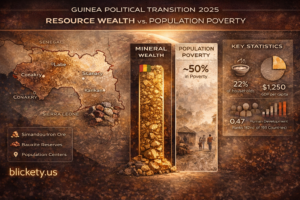
Guinea possesses approximately one-third of the world’s bauxite reserves (the raw material for aluminum), significant iron ore deposits, diamonds, gold, and uranium. Despite this extraordinary mineral wealth, half of Guinea’s 15 million people live in poverty with record levels of food insecurity, according to the World Food Program.
This contradiction—extraordinary wealth underground, grinding poverty above it—is not an accident or a mystery. Rather, it’s the predictable outcome of economic structures where resource extraction benefits international corporations and local elites while bypassing the general population.
The Simandou Project: Development or New Exploitation?
Doumbouya’s government has focused heavily on the Simandou iron ore project, which is 75 percent Chinese-owned. Production began in 2024 after decades of delays, with authorities presenting it as the key to revitalizing Guinea’s economy.
The project represents significant infrastructure development and potential revenue. However, the 75 percent foreign ownership raises critical questions about sovereignty and benefit distribution. Will this massive mining operation create sustainable development for ordinary Guineans, or will it follow historical patterns where resource extraction enriches external actors and local elites while the population remains impoverished?
The Pan-African Question: Sovereignty vs. Investment
For Pan-African observers, the Simandou project crystallizes a fundamental tension. African nations need capital and technology for large-scale resource development. Yet partnerships where foreign entities control 75 percent ownership perpetuate colonial-era dynamics where African resources flow outward while poverty persists.
The Afro-Futurist question becomes: What alternative models exist? How can African nations develop resources for genuine domestic benefit rather than continuing extraction relationships that began under colonialism?
Doumbouya’s government, like many African administrations, argues that foreign investment is necessary for development. Critics counter that Guinea’s history shows resource development hasn’t translated to widespread prosperity, regardless of who controls the presidential palace.
Democratic Backsliding or Sovereignty Assertion?
Western media coverage of Guinea’s transition typically frames it through a “democratic backsliding” lens—a military coup leader manipulating institutions to legitimize authoritarian rule. This analysis isn’t wrong, but it’s incomplete.
The Limits of Electoral Democracy Without Economic Sovereignty
Guinea has held elections before. It has had civilian presidents. Yet poverty persists, food insecurity worsens, and mineral wealth continues flowing outward. Therefore, focusing exclusively on electoral procedures without addressing economic structures misses why many Guineans feel civilian democracy hasn’t delivered tangible improvements.
This doesn’t justify authoritarian consolidation. However, it explains why democratic backsliding sometimes receives ambivalent responses from populations who haven’t experienced democracy producing better material conditions.
The Francafrique Shadow
Guinea’s political economy cannot be understood without acknowledging French neocolonial influence in West Africa—the system known as “Francafrique” where France maintains economic and political control over former colonies through currency manipulation, military bases, and corporate dominance.
When military governments across the Sahel and West Africa increasingly assert sovereignty against French influence, Western responses often emphasize democratic deficits while minimizing decades of French-enabled corruption and resource extraction. Consequently, some see military governments as imperfect but necessary assertions of sovereignty against neocolonial control.
Again, this doesn’t make authoritarianism acceptable. But it contextualizes why debates about Guinea’s governance cannot be separated from questions about who ultimately controls African economies and resources.
What This Means for West Africa’s Future
Doumbouya’s inauguration as Guinea’s president signals several important trends across West Africa and the broader continent.
The Normalization of Military-to-Civilian Transitions
Military governments increasingly use constitutional processes and elections to legitimize their rule rather than simply governing by decree. This creates hybrid systems: formal democratic structures housing authoritarian realities.
ECOWAS and the African Union face difficult choices about how to engage with these governments. Furthermore, outright isolation risks pushing them toward other international partners (notably China and Russia) while potentially harming civilian populations through sanctions.
The Resource Sovereignty Question Intensifies
As Western influence wanes in parts of Africa and Chinese and other partnerships expand, questions about resource control become increasingly urgent. Will new partnerships create different outcomes, or simply replace old extraction relationships with new ones?
The Simandou project’s development under Doumbouya’s government will provide important data. If it generates widespread economic benefits for ordinary Guineans, it could model alternative development pathways. If it replicates historical patterns of elite enrichment and popular impoverishment, it will reinforce skepticism about foreign-dominated resource extraction regardless of which foreign power dominates.
The Democracy Dilemma Persists
The fundamental challenge remains: How do African nations build governance systems that are both genuinely accountable to populations and capable of asserting economic sovereignty against powerful external actors?
Military governments that centralize power claim they can make tough decisions without political obstruction. Yet concentrated power historically leads to corruption and abuse regardless of initial intentions. Meanwhile, civilian democracies often prove vulnerable to external manipulation and elite capture that leaves ordinary people no better off.
Neither model has consistently delivered prosperity and sovereignty simultaneously. Therefore, the Afro-Futurist question becomes: What new governance models might better serve African populations? What hybrid or innovative approaches could combine accountability with effective sovereignty assertion?
The Path Forward: Questions That Matter
As Doumbouya settles into a seven-year presidential term, several questions will determine Guinea’s trajectory and its impact on regional patterns:
Will resource development benefit ordinary Guineans? The Simandou project and other mining operations must show tangible improvements in poverty, food security, and infrastructure for the population. Otherwise, political transitions mean little when economic conditions don’t improve.
Can opposition meaningfully organize? If Doumbouya governs as an authoritarian using democratic structures as decoration, Guinea joins a long list of African nations with elections but no real political competition. Genuine democracy requires space for opposition.
How will regional bodies respond? ECOWAS and the African Union’s engagement with Guinea will signal how they navigate the tension between democratic principles and political realities across West Africa’s military government wave.
What partnerships will Guinea pursue? The balance between Chinese, Western, and other international relationships will shape both economic outcomes and political pressures on the government.
For the African diaspora and Pan-African observers, Guinea’s moment demands attention not as a distant news item but as part of continental struggles for self-determination and prosperity. The questions playing out in Conakry—about governance, resources, sovereignty, and who benefits from African wealth—are questions facing the entire continent.
The stadium where Doumbouya took his oath is new, built to mark this political transition. But the challenges facing Guinea’s people are old: How to translate mineral wealth into widespread prosperity. How to build governance that serves populations rather than elites. How to assert sovereignty while navigating powerful international interests.
Doumbouya’s presidency will be judged not by the size of his electoral victory or the grandeur of his inauguration venue, but by whether ordinary Guineans eat better, live healthier, and see their children’s futures improve. Everything else is theater.
The revolution that matters isn’t in presidential palaces. It’s in whether Guinea’s extraordinary mineral wealth finally begins serving Guinean people.
FAQ Section:
Q: Who is Mamadi Doumbouya and how did he become Guinea’s president in 2025? A: General Mamadi Doumbouya seized power in a September 2021 military coup, overthrowing President Alpha Condé. The Guinea political transition 2025 culminated when Doumbouya won the December 2024 election with 86.7 percent of votes after overseeing constitutional changes that removed prohibitions on military leaders seeking office and extended presidential terms to seven years.
Q: Why are so many West African countries experiencing military governments? A: Recent military transitions in Mali, Burkina Faso, Niger, and Guinea stem from multiple factors: civilian government corruption and ineffectiveness, security crises especially in the Sahel, popular frustration with leaders who manipulated constitutions to extend power, and growing assertions of sovereignty against French neocolonial influence. These governments often receive initial popular support but face criticism for consolidating authoritarian power.
Q: What is the Simandou iron ore project in Guinea? A: The Simandou project is a massive iron ore mining operation that began production in 2024 after decades of delays. It is 75 percent Chinese-owned and positioned by Guinea’s government as key to economic revitalization. The project raises questions about whether large-scale foreign-controlled resource extraction can generate widespread domestic benefits or will replicate historical patterns of wealth flowing outward while poverty persists.
Q: How does Guinea’s mineral wealth compare to its population’s living conditions? A: Guinea possesses approximately one-third of global bauxite reserves plus significant iron ore, diamonds, gold, and uranium deposits. Despite this extraordinary mineral wealth, half of Guinea’s 15 million people live in poverty with record food insecurity levels according to the World Food Program. This contradiction reflects decades of resource extraction that has enriched external corporations and local elites without benefiting the general population.
Q: What does Guinea’s political transition 2025 mean for African democracy and West African stability? A: Guinea’s political transition 2025 represents a concerning pattern where formal democratic structures house authoritarian realities across West Africa. It raises fundamental questions about whether electoral procedures alone constitute democracy when opposition cannot meaningfully compete, and whether democratic governance without economic sovereignty can deliver meaningful improvements for African populations. The challenge remains building systems that are both accountable and capable of asserting sovereignty.