Built Different, Built Brilliant: 10 Years of HBCU Tech Innovation at BE Smart Hackathon
Three hundred ten students. Forty-three schools. Sixty-two teams. One mission: prove that Black tech excellence isn’t the future—it’s right now.
The 10th Annual BLACK ENTERPRISE BE Smart Hackathon descended on Charlotte, North Carolina, November 5-8, 2025, shattering its own records AxiosFinancialContent with the largest gathering of HBCU tech talent in the competition’s history. Presented by American Airlines with support from Fidelity Investments, McDonald’s, NASCAR, PepsiCo, Toyota, Verizon, and more, this wasn’t just a coding competition—it was a declaration.
As BLACK ENTERPRISE CEO Earl “Butch” Graves Jr. put it: “As Artificial Intelligence is now a part of everyday life, we are proving that HBCU students are the original AI: Authentically Intelligent.” FinancialContent
Built different. Built brilliant. Ten years of elevating excellence.
When Code Becomes Community Care
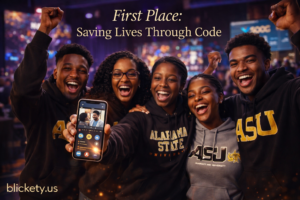
Alabama State University claimed first place with an app that connects pregnant women in rural Alabama with gynecological care through mobile consultations, directly addressing maternal mortality in underserved communities Qviro. Their prize? $47,000 in scholarships, laptops, drones—and the knowledge that their code saves lives.
North Carolina Central University secured second place with an app that locates food pantries by ZIP code and generates recipes based on grocery receipts Qviro—turning food insecurity data into dinner solutions. This is HBCU tech innovation: technology that understands struggle because the creators live it, then engineers liberation.
The 24-hour coding sprint wasn’t about building the next viral app or unicorn startup. It was about solving real problems for real people—the kind Silicon Valley often ignores because there’s no billion-dollar exit strategy in feeding the hungry or protecting Black mothers.
The Numbers Tell a Liberation Story
HBCUs account for only 9% of Black undergraduates but produce nearly 18% of all Black bachelor’s degrees in STEM FoundSF. Read that again. With a fraction of the resources, HBCUs deliver double the results.
Yet Black workers comprise 11% of the U.S. labor force but hold just 9% of STEM jobs, including only 5% in engineering and 7% in computing FoundSF. The talent exists. The brilliance is undeniable. The barrier? Systems that refuse to see what HBCUs have always known: we built different because we had to be.
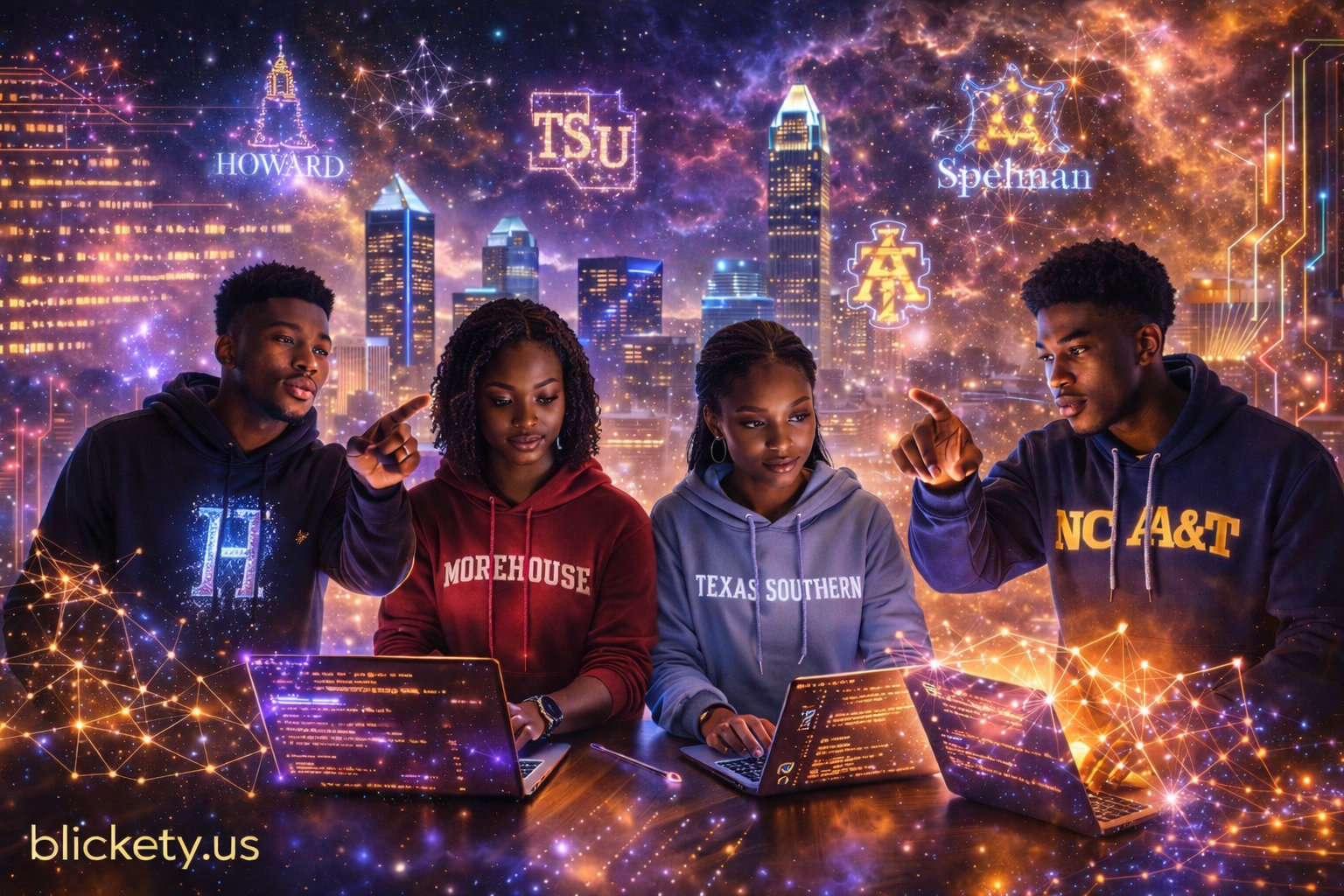
The competition featured students from Johnson C. Smith, North Carolina A&T, Shaw University, Benedict College, Claflin University, and defending champion Spelman College Axios—whose all-women Team Protégé won in 2024. Morgan State University, the only school to participate in all nine previous hackathons, returned after earning the highest technical score in 2024 TechCrunch.
This is ancestral persistence meeting digital revolution. This is what happens when you never stop showing up, never stop proving excellence, never stop believing our brilliance belongs in every space we enter.
More Than a Competition: A Pipeline to Power
During the 24-hour Hack, corporate sponsors provided technical mentors, tasking teams with developing solutions to real-world challenges Axios. Judges evaluated innovation, technical complexity, user-friendliness, and presentation skills—but companies evaluated something else: future employees.
Students interviewed with American Airlines, Verizon, Fidelity, and more. Johnson C. Smith sophomore Nkazimulo “Zee” Gumede from Zimbabwe said: “I like a platform where I can be creative, give out ideas and initiate them. At the same time, I like to compete” Qviro. His team built an AI-powered financial advisor app providing real-time budgeting guidance—because HBCU tech innovation understands that financial literacy is freedom.
Fellow teammate Swetakshi Nanda from India noted: “They want a real solution to real problems…we need to look at the business perspective to cater to potential clients” Qviro. This is the magic: HBCU students don’t just code—they contextualize. They don’t just build apps—they build bridges between technology and humanity.
The Afro-Futurist Blueprint: Technology as Liberation
Since 2013, UNCF’s HBCU Innovation Summit has introduced over 300 computer science and engineering students to Silicon Valley’s tech giants Contemporary And, while partnerships with companies like IBM, Google, and Microsoft provide hands-on learning, faculty-led research, and industry connections FoundSF.
But here’s what makes HBCU tech innovation revolutionary: we’re not trying to fit into their future—we’re building our own.
Alabama State’s maternal health app doesn’t chase venture capital—it chases life-saving impact. NC Central’s food pantry locator doesn’t optimize for profit—it optimizes for community survival. This is technology infused with the same genius that created jazz, invented refrigeration systems, performed the first open-heart surgery, and sent astronauts to space while battling segregation.
HBCUs create tight-knit communities with smaller student populations and faculty-student relationships that eliminate “weed-out” classes plaguing predominantly white institutions Medium. Since Black and other minority students leave STEM majors at nearly twice the rate as white students, HBCUs’ efforts to adapt curriculum and community are critical Medium.
We don’t survive tech—we transform it. That’s the Afro-Futurist truth the BE Smart Hackathon celebrates year after year.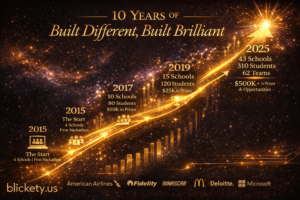
What “Built Different, Built Brilliant” Really Means
BLACK ENTERPRISE CEO Graves Jr. told participants: “We’re giving out some big prizes to the top three teams. So some kids will be going to walk away from here very happily” Qviro—but the real prize isn’t the $100,000 in scholarships, the MacBooks, or the drones.
The real prize is 310 students who know their brilliance is undeniable. Sixty-two teams who experienced what happens when you’re surrounded by people who look like you, think like you, dream like you—and refuse to accept limits. Forty-three schools proving that HBCU tech innovation isn’t niche—it’s necessary.
Charlotte Mayor Vi Lyles welcomed these students to the Queen City, recognizing what corporations are finally learning: HBCU talent isn’t a diversity checkbox—it’s a competitive advantage.
The Next Decade Starts Now
Ten years ago, BE Smart Hackathon launched with four schools. Today, it’s the premier HBCU tech showcase, connecting students directly to careers, mentorship, and validation that their minds are precisely what technology needs.
As tech companies grapple with glaring underrepresentation of Black professionals in STEM fields, HBCUs aren’t waiting for change—they’re engineering it FoundSF. Through UNCF HBCU Innovation programs, CodePath partnerships, and events like BE Smart, the pipeline is flowing.
But let’s be clear: we’re not begging for seats at their table. We’re building our own, and inviting them to learn from us.
Because when pregnant mothers in rural Alabama get life-saving care through an app coded by Black students, when families find food because brilliant minds mapped hunger solutions, when financial literacy becomes accessible through AI built with community in mind—that’s not just innovation.
That’s liberation. That’s legacy. It’s what it means to be Built Different, Built Brilliant.
Interested in supporting HBCU tech innovation? Learn more at BLACK ENTERPRISE Hackathon, explore HBCU computer science programs, or support UNCF’s HBCU Innovation initiatives.