Darius McCollum MTA: The Autistic Transit Genius NYC Won’t Hire
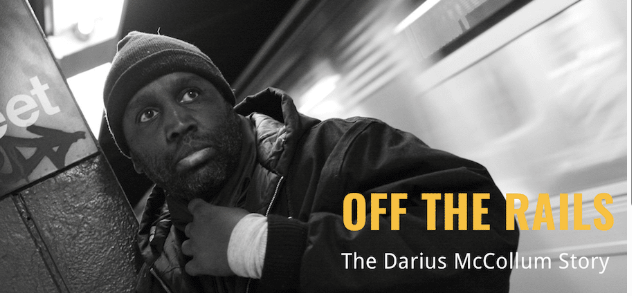
At age 8, Darius McCollum memorized the entire New York City subway map The Jerusalem Post. By 15, he drove a packed train six stops by himself, making all the stops and announcements perfectly Sessionize. Over three decades, he operated trains and buses with precision that real MTA employees couldn’t match—never damaging property, never hurting anyone, always on time.
His reward? Thirty-two arrests. Twenty-three years in maximum security prison. Indefinite confinement in a psychiatric facility for the “criminally insane.” The Jerusalem Post
The Darius McCollum MTA case isn’t just about one Black autistic man’s obsession with trains. It’s about a system that criminalizes brilliance it refuses to accommodate, that locks away the very genius it needs, that sees “dangerous mental illness” where there’s only passionate excellence.
And in 2026, as viral attention reignites his story, we must ask: How many more Darius McCollums are we crushing instead of celebrating?
The Boy Who Loved Transit: How the Darius McCollum MTA Story Began
At 12, McCollum was stabbed by a fellow student at school and decided to retreat underground into the subway, which he saw as a safe haven Wikipedia. There, transit workers noticed the quiet Black kid who knew every schedule by heart, who understood the system better than employees with decades of experience.
Transit workers took him in and eventually let him start taking their shifts, off the books. “They trusted me and they know I knew the system,” he said. “They needed time off to get things done. I was available.” Wikipedia
Think about that. Adult MTA employees regularly handed this child the keys to multi-ton subway trains carrying hundreds of passengers. They exploited his autism, his eagerness to help, his desperate need for acceptance. When McCollum was arrested at 15, he never told authorities how he learned to operate trains because he didn’t want to betray his “friends” who were having a child with autism take over their shifts Africatechnologyexpo.
Those adults faced zero consequences. The disabled Black child? That arrest made it impossible for him to do the only thing he loved—work for the NYC transit system Africatechnologyexpo.
Darius McCollum MTA Expertise: Better Than the “Real” Employees
McCollum admitted in 2018 court testimony to operating trains and buses over 5,000 times throughout his life The Register, often in full uniform with fake IDs he’d meticulously created. He told investigators: “What goes through my mind is the enjoyment, the thrill, the satisfaction to do it, and do it better than other people.” Wikipedia
And he was better. Passengers regularly described him as friendly and helpful when he appeared as transit employees using names like “Morning” or “Manning.” No incidents occurred whatsoever because he knew the job better than any actual MTA employees Afrotechconference. He made every stop. He announced stations clearly. He attended transit worker union meetings, lobbying for better pay and working conditions for a union he didn’t belong to Sessionize.
One time, he drove a Greyhound bus to help stranded passengers during a snowstorm. Another time, he fixed broken signals for free. Homeland Security even visited him in prison to learn from him how to prevent others from impersonating transit employees Afrotechconference. Darius was honored to help them.
They did nothing to help him. 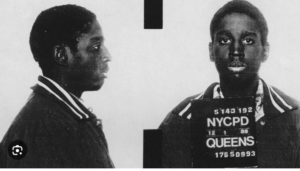
The System’s “Solution”: Lock Away the Genius
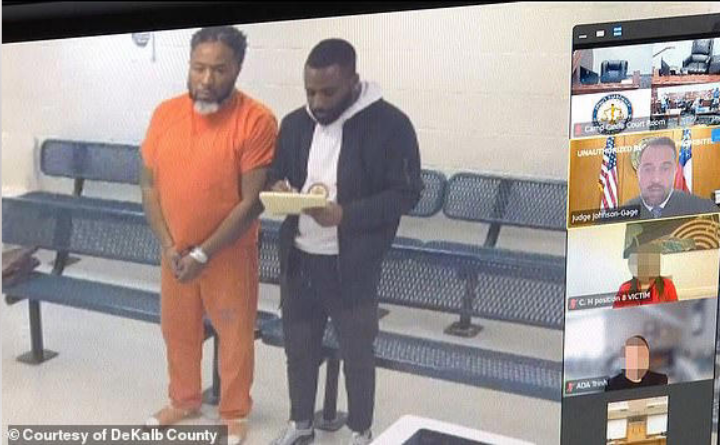
In January 2018, McCollum took a plea bargain agreeing to indefinite psychiatric institutionalization. In October 2018, Judge Ruth Wallingford ruled that “Asperger Syndrome is a dangerous mental disorder” and sent Darius to Rochester Forensic Psychiatric Hospital, a maximum-security prison facility for the most violent imprisoned criminals The Jerusalem Post.
Read that again. A judge declared autism itself “dangerous.” A man who never hurt anyone, never damaged property, whose only “crime” was doing a job too well without permission—condemned to live among rapists and murderers.
As of October 2025, McCollum was transferred to a facility in Orangeburg, NY with non-violent offenders, though he remains indefinitely confined with limited intellectual stimulation TechCrunchAfrotechconference. His days consist of waking at 6 a.m., taking minimal medication, watching TV with fellow prisoners, and getting one hour outside to walk or shoot hoops before sleeping by 8:30 p.m. TechCrunch
Advocate Michael John Carley notes: “The lack of intellectual stimulation, I feel, has truly taken a toll on one of the most brilliant minds I’ve come across.” TechCrunch
The Bigger Picture: Darius McCollum MTA Case and Black Neurodivergent Liberation
Carley’s 2018 piece in Exceptional Parent magazine was titled “Autism-Schmautism: In the End, Darius McCollum Was Poor and Black” TechCrunch—because that’s the truth nobody wants to say loud. A wealthy white autistic man with this level of transit expertise? He’d be a consultant. A Ted Talk speaker. An MTA efficiency expert.
But Darius McCollum? Despite suggestions from autism advocates that the MTA hire McCollum in some capacity (similar to how the FBI hired former con artist Frank Abagnale), transit officials reject this due to fear of legal liability The Jerusalem Post.
“Legal liability” for what? Employing someone too competent? Meanwhile, EEOC data shows autism-related employment discrimination claims more than doubled from 0.4% of total merit resolutions in 2016 to 1.5% in 2023 FoundSFContemporary And. Unemployment rates for autistic adults hover around 40%, with some private estimates suggesting 85% of adults with autism are unemployed Southwestcontemporary.
As Harvard Business Review notes: “Autism doesn’t hold people back at work. Discrimination does.” Washington University
The Darius McCollum MTA story crystallizes this perfectly: the system doesn’t want to accommodate Black neurodivergent excellence—it wants to eliminate it.
Movement as Technology: The Afro-Futurist Reading
Our ancestors understood strategic movement as liberation technology—from the Underground Railroad to the Great Migration. Darius’s compulsion to operate trains wasn’t pathology; it was calling. His brain, wired differently, saw patterns and systems that neurotypical workers miss.
This is what Afro-Futurism teaches: what the system calls “disorder” is often just genius it can’t control.
Darius memorized the entire subway system at 8—not because he was “sick,” but because his mind worked at frequencies others couldn’t access. He operated flawlessly under pressure. He served passengers with care. He advocated for workers’ rights despite never being paid.
“It’s like I’m drawn in,” he told investigators. “I don’t know how to fight that feeling on my own.” Wikipedia
He shouldn’t have to fight it. We should have harnessed it.
The Movement for Darius McCollum MTA Justice 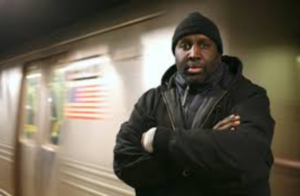
Recently, TikToker Xevi (4.4 million followers) reignited interest in McCollum’s case, calling his imprisonment a “gross injustice” in a viral video that’s led to a growing petition on Change.org demanding his release TRT Global.
The Free Darius McCollum petition argues powerfully: “Darius is not, has never been, and will never be, dangerous, nor is he mentally ill. He has a disability. We demand NYS Attorney General Letitia James realize Darius is not dangerous, and stop keeping him locked up with violent inmates.” Africatechnologyexpo
Organizations like Neurodiversity Press continue covering his case, while autism employment advocacy groups like Organization for Autism Research highlight how the Darius McCollum MTA story represents systemic failures affecting millions of autistic workers.
What We Owe Darius—and Every Neurodivergent Worker
First: Free him. Darius McCollum deserves immediate release to a supportive community setting, not indefinite confinement.
Second: Hire him. The MTA should formally employ Darius in transit consultation, safety training, or system efficiency roles—paying him what his decades of expertise warrant.
Third: Transform the system. Employers must review policies to prevent discrimination, harassment, and retaliation against workers with ADA-qualified neurodivergent disabilities FoundSF. Accommodations like flexible schedules, quiet workspaces, clear communication, job coaching, and task modification can dramatically improve autistic workers’ success FoundSF.
Fourth: Stop criminalizing disability. The Darius McCollum MTA case proves we’d rather imprison brilliance than accommodate difference. That must end.
Your Action Steps
Support the Change.org petition demanding Darius’s release.
Contact New York Attorney General Letitia James demanding review of McCollum’s case.
Learn about autism employment rights through the EEOC and support organizations like the Autistic Self Advocacy Network.
Share Darius’s story using #FreeDariusMcCollum and #DariusMcCollumMTA.
The Future We’re Building
Darius McCollum loved trains the way our ancestors loved freedom—with a passion that systems couldn’t comprehend or contain. He spent 23 years in maximum security prison Sessionize for the “crime” of excellence.
That’s not justice. That’s not safety. That’s the destruction of Black neurodivergent genius because it doesn’t fit neurotypical, white-supremacist norms.
The trains Darius loved run on schedules—rigid, predictable, necessary. But liberation runs on something else: the refusal to accept that brilliance deserves cages.
All Darius ever wanted was to drive trains. All we’re asking is that he finally get the chance—legally, safely, and paid.
Because the only thing dangerous about the Darius McCollum MTA story is what it reveals about us.
What are your thoughts on the Darius McCollum case? Have you or someone you know faced employment discrimination due to neurodivergence? Share your story in the comments and help us build a movement for neurodivergent justice.