The Rhythm in the Machine: Afro-Surrealism and the Soul of 2026 Robotics
Beyond the Uncanny Valley
Tesla just fired up mass production of Optimus Gen 3. Boston Dynamics’ Atlas walks factory floors autonomously. The humanoid revolution is here—but something feels wrong. These machines, for all their technical marvel, carry the aesthetic DNA of sterile laboratories: white plastic shells, chrome actuators, movements that whisper “efficiency” but never “expression.”
They’re engineered to blend in, yet they unsettle us. This is the uncanny valley talking—that creeping discomfort when something almost-human falls just short. But what if the problem isn’t how realistic these robots look? What if it’s that they lack cultural resonance, rhythm, and soul?
Enter Afro-Surrealism: the art movement that treats Black life itself as surreal, mystical, and hyper-technological. Unlike Afro-Futurism’s speculation about tomorrow, Afro-Surrealism is about right now—the beautiful absurdity of the present. As writer D. Scot Miller declares, “Afro-Surrealists understand that the four horsemen rode through too long ago.” This movement doesn’t wait for the future; it transforms the present through excess, hybridization, and emotional truth.
What if we designed robots the same way? 
Designing the “Black Cyborg”
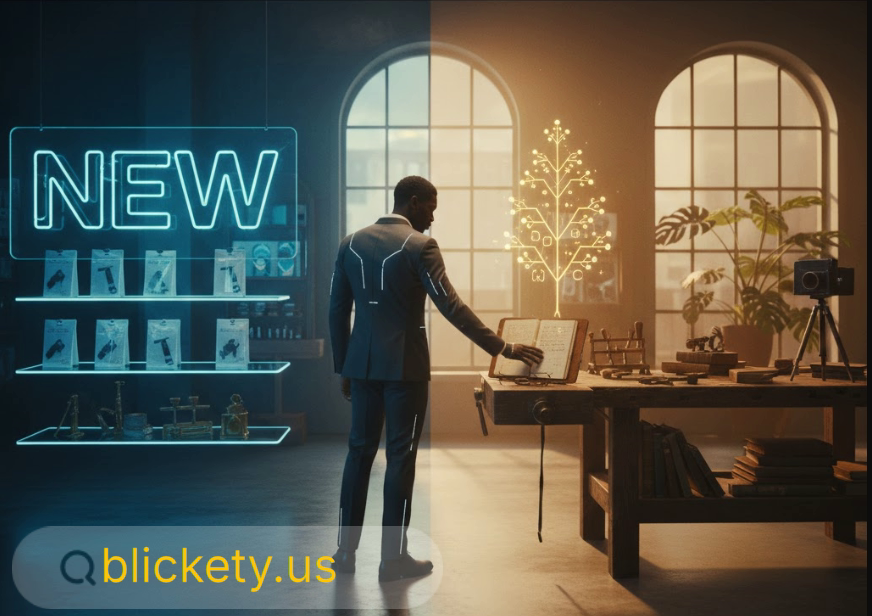
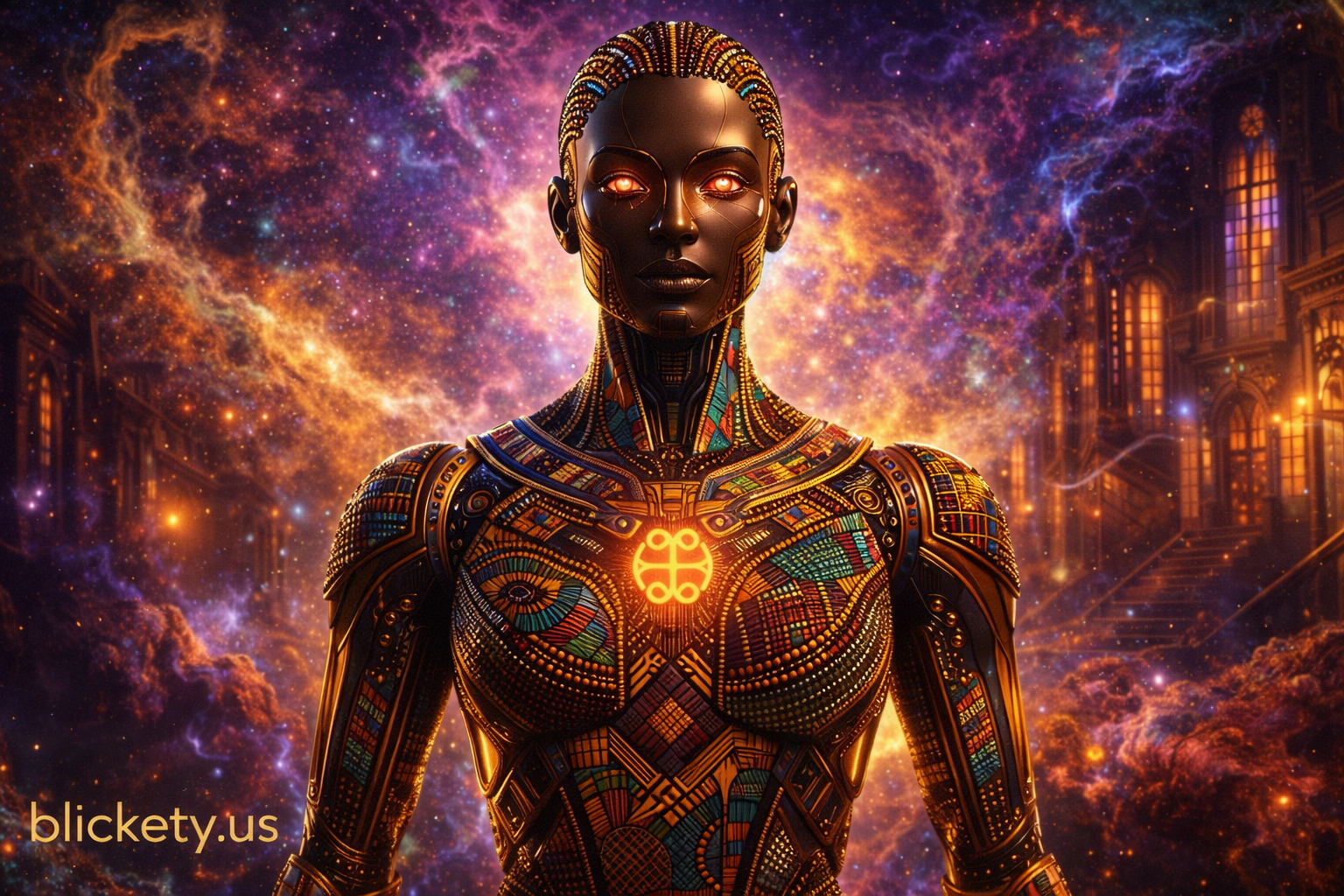
Imagine walking through Lagos in 2027 and encountering a Care-Bot that doesn’t look like a hospital appliance but moves like a walking sculpture. Its “skin” isn’t white ABS plastic—it’s woven synthetic fibers in deep melanin tones, patterned with geometric precision that echoes traditional beadwork. Solar-reactive polymers shift color under sunlight, creating living art that breathes with its environment.
This isn’t science fiction. Artists like Kenyan sculptor Cyrus Kabiru already merge e-waste with traditional forms, turning discarded circuit boards into ceremonial masks. Nigerian innovators developed Omeife, Africa’s first humanoid robot, which speaks six African languages and serves as a cultural ambassador. The Africa Deep Tech Conference in Lagos (February 2026) is showcasing frontier robotics that center community needs over corporate aesthetics.
The blueprint exists. We’ve simply been looking in the wrong direction—toward Silicon Valley instead of Accra, Atlanta, and Kingston.
Movement as Language
Tesla’s robots walk at 5 mph. Boston Dynamics’ Atlas can do backflips. Impressive—but movement isn’t just about speed or acrobatics. It’s communication. Consider how a knowing nod conveys respect, how a hand-on-heart gesture signals sincerity, how polyrhythmic dance expresses joy that words can’t capture.
Current robots move like they’re perpetually late for a corporate meeting. What if instead they learned from Pantsula’s explosive footwork or Sabar’s percussive elegance? Using AI-driven Kinetic Style Transfer, we could train actuators on the fluid, call-and-response movements found across the African diaspora—movements that aren’t just efficient but expressive.
A robot that pauses mid-gesture to “listen” before responding. One whose posture shifts to signal care rather than command. This isn’t anthropomorphism—it’s cultural intelligence. D. Scot Miller reminds us that Afro-Surrealism is about the present, understanding that we’re living in the future-past right now Wikipedia.
The “Spirit” in the Shell
Voice assistants like Siri sound competent but hollow. Now imagine a robotic Griot—a machine that doesn’t just report the weather but contextualizes it through proverb and metaphor. “The sky gathers its thoughts today, so carry patience with your umbrella.”
We have the technology. Large language models can be trained on the rich, metaphorical nature of African dialects, Patois, and oral traditions. The challenge isn’t technical—it’s imagination. We’re so conditioned to sterile “neutrality” in AI that we’ve forgotten technology can carry culture, humor, and wisdom.
Afro-Surrealist robotics would build machines that tell stories, not just execute commands. That turn information into narrative. That understand conversation as communion, not transaction.
Avoiding the “New Servant” Narrative
Here’s where we must tread carefully. The history of Black bodies performing labor for white comfort is not ancient—it’s ongoing. Designing culturally Black robots to serve raises uncomfortable questions about digital servitude and technological exploitation.
The solution? Frame these creations as “Digital Kin”—autonomous entities representing community pride and technological sovereignty. Not “help,” but collaborators. Not servants, but extensions of collective Black genius. Robots designed by and for communities, embodying cultural values rather than corporate efficiency metrics.
This matters because by 2027, Elon Musk envisions billions of humanoid robots in homes worldwide Standard Bots. If we don’t shape this future now, we’ll inherit someone else’s vision—one likely stripped of the very cultural richness that makes technology human.
A Future with Soul 
Afro-Surrealism teaches us that the future doesn’t arrive sterile and gray. It bursts forth vibrant, strange, deeply human. As contemporary artists from Wangechi Mutu to Kehinde Wiley demonstrate, we can take the technological and infuse it with texture, memory, and marvelous excess.
The robots are coming. Tesla’s producing thousands. Boston Dynamics is scaling up. Africa’s tech ecosystem is surging with deep tech innovation. The question isn’t if humanoid machines will reshape our world—it’s whose aesthetic, whose values, and whose vision of the future they’ll carry.
If the robots are coming, let them come with the rhythm of the diaspora. Let them speak in proverbs and move in polyrhythm. Let them be wrapped in woven textures and melanin-rich polymers that catch light like living art.
Let them come with soul.
Because the future Afro-Surrealism offers isn’t about escaping reality—it’s about transforming it. And that transformation starts with imagining machines that honor the beautiful, absurd, hyper-technological reality of Black life right now.
The future is already here. It’s just waiting for us to design it properly.
What would your ideal Afro-Surrealist robot look like? Share your vision in the comments below.