The accusation is a familiar ghost in the machine of American discourse: “Black Americans have no culture.” It whispers in schoolyard debates, simmers in online comment sections, and sometimes erupts in tense conversations about coalition and community. But what if this claim isn’t a diagnosis of lack, but a symptom of something more profound? What if, through an Afro-Futurist lens, we see it as jealousy—a reaction to the breathtaking, future-shaping power of Black American cultural innovation and our unshakable claim to the American narrative itself?
My own awakening to this dynamic was forged in the heat of Texas. My childhood crew was a beautiful mosaic—vatos and chica bonitas who felt like family. We talked about everything, and periodically, the mantra of “Black and brown solidarity” would rise up like gospel. Shared struggle, united front. I believed it with my whole heart. We showed up at each other’s rallies, voted in blocs when the system pressed down on our necks.
But a pattern emerged, subtle then stark. Gains materialized—a city council seat here, a new community center there—and the solidarity became selective. When our pain hit a national fever pitch with police killings and mass incarceration, the support was often muted, conditional. Yet, when immigration raids spiked, the call for coalition would ring out anew: “You’re next! Stand with us!” The response from my block, and countless others, wasn’t malice, but a weary, knowing laughter. Next? We’d been carrying the weight of American contradiction for centuries. The feeling was of a partnership where one side’s struggle was leveraged as a perpetual stepping stone, not a shared burden.
This isn’t just a Texas story. Look to Minnesota, home to the largest Somali diaspora in the U.S. Frictions surface—over resources, in schools, through clashing stereotypes. Some within that community, seeking footing in a racially stratified America, consciously distance themselves from Black Americans. They may amplify their distinct clan ties, Islamic practices, and Somali heritage as “real culture,” implicitly framing Black American identity as a void born of slavery and displacement—a cultural loss narrative.
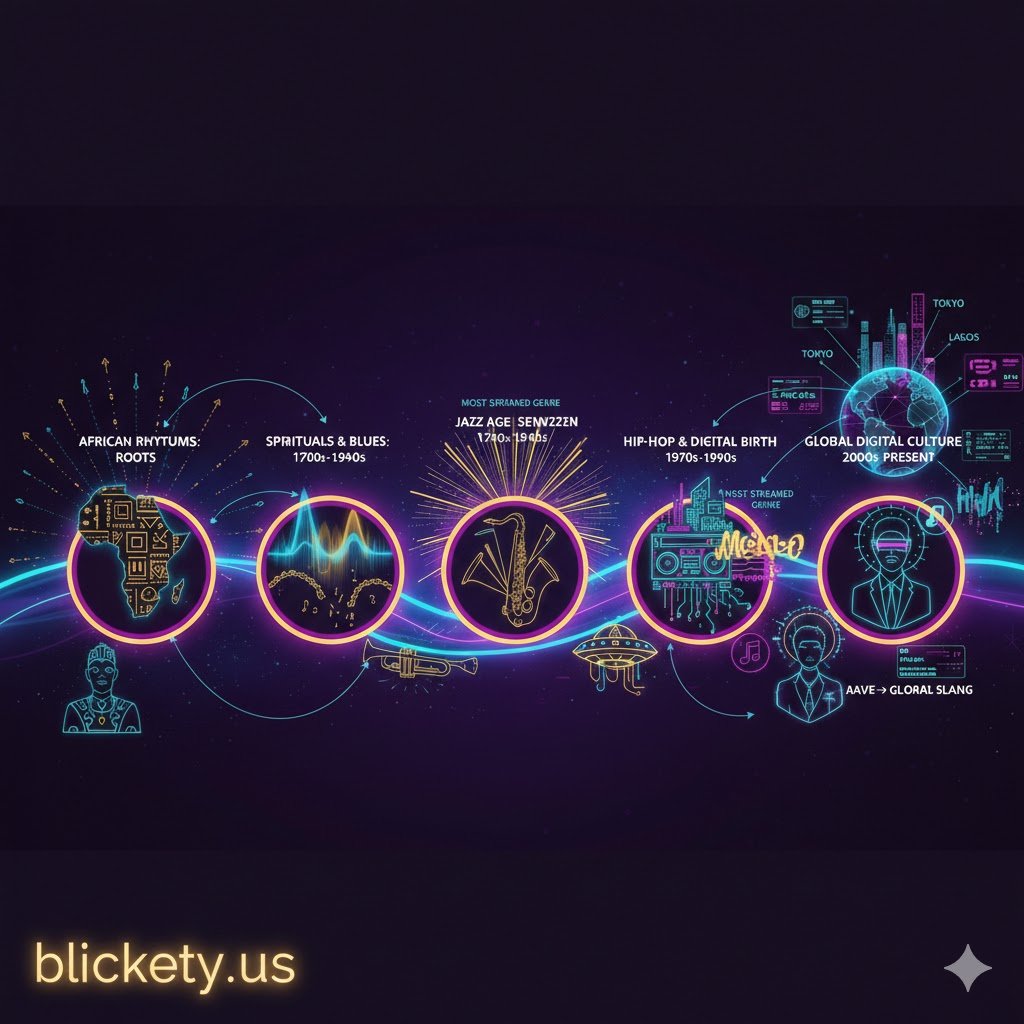
But let’s speak a visionary truth: this narrative isn’t just wrong; it’s a profound misreading of history and power. Black American culture isn’t missing. It is the dominant cultural operating system of the 21st century. This isn’t hyperbole; it’s data. Hip-hop isn’t just a genre; it’s the most-streamed musical form on the planet, its rhythms and aesthetics directly shaping K-pop, Afrobeats, and youth identities from Seoul to São Paulo. The lexicon of cool—”lit,” “slay,” “woke,” “fam”—is AAVE (African American Vernacular English) gone global, a digital-age testament to our syntactic innovation. Streetwear and sneaker culture, a trillion-dollar ecosystem, was born on our blocks and courts. We didn’t lose our culture; we forged a new, infinitely adaptable one from the fire of our experience, and the world downloads it daily.
From “Degenerate Music” to Global Soundtrack: A Blueprint of Innovation
To understand the present, we must connect it to our past’s future-facing spirit. Rewind a century. In the 1920s and 30s, jazz—a Black American innovation born from the alchemy of African rhythms, blues, and spirituals in places like New Orleans—electrified and terrified the Western world. European elites didn’t just dislike it; they feared it as a viral, liberating force. Nazis condemned it as “Negermusik,” a “Jewish-Negro plot” corrupting Aryan youth. They banned its “orgiastic” rhythms.
But jazz, like all potent Black cultural forms, could not be contained. It spread underground, in exile, on clandestine records. It became, not merely entertainment, but the soundtrack of freedom and modernist thought. This is the prototype: Black America creates a radical new form; the establishment condemns it as “low” or “dangerous”; the form proliferates globally and becomes synonymous with liberation and modernity. See: Rock ‘n’ Roll (via Chuck Berry), Hip-Hop, and the very aesthetic of “cool.”
The “no culture” claim, then, is often envy dressed as superiority. It confuses preservation with creation. Many immigrant communities rightly cherish and maintain ancient traditions. Black Americans, forcibly severed from specific ethnic lineages, performed a different kind of genius: we synthesized. We took fragments, necessities, and profound pain and built entirely new cultural worlds—worlds so compelling they now set the global pace. Our “Americanness” is not a bland assimilation; it is a hard-won, deeply generative identity. We have a centuries-deep claim to this land and its narrative, and from that contested ground, we have launched cultural revolutions.
The Afro-Futurist Lens: Building the Future on a Foundation of Fire
This is where the conversation must pivot to the future. An Afro-Futurist perspective asks us to see Black culture not as a response to oppression, but as a proactive, visionary force. Our cultural products have always been technologies of imagination—tools for envisioning and building different futures.
- Jazz was sonic code for improvisation and collective freedom.
- Hip-Hop is the database and network, sampling the past to narrate the present and imagine new realities.
- AAVE is a living, adaptive software for community and cognition.
The jealousy, when it exists, may stem from seeing this power. Newcomers often engage in a brutal hustle for belonging and legitimacy within a rigid American hierarchy. They witness Black Americans, despite systemic marginalization, wielding this undeniable, bottom-up cultural authority. We don’t ask for a seat at the pop culture table; we built the table and defined the menu. That stings, and sometimes manifests as the sideways glance, the “ghetto” label, the distancing claim to “real” heritage.
Toward Authentic Coalition: Beyond Leverage
This analysis isn’t about casting blanket blame. Anti-Blackness in some immigrant communities is real. Economic friction exists. Stereotypes flow both ways. But for coalitions to be more than transactional, they must be built on clear-eyed mutual respect, not the leveraging of one group’s historical trauma.
True solidarity looks less like a temporary alliance against a common enemy and more like the deliberate, respectful mixing of distinct, powerful ingredients—each bringing its full, uncompromised flavor to create something new and stronger. It requires acknowledging a difficult truth: Black American culture is not a void to be pitied, but a gravitational force to be understood and respected.
We stand at a crossroads. We can continue with fractured narratives and conditional alliances. Or, we can step into the Afro-Futurist possibility: recognizing that the very adaptive, innovative, future-building genius that crafted jazz and hip-hop from struggle is the same genius needed to navigate an increasingly complex multi-racial future. Our culture was never lost. It was, and is, being built—and the blueprint is etched in everything the world calls cool.